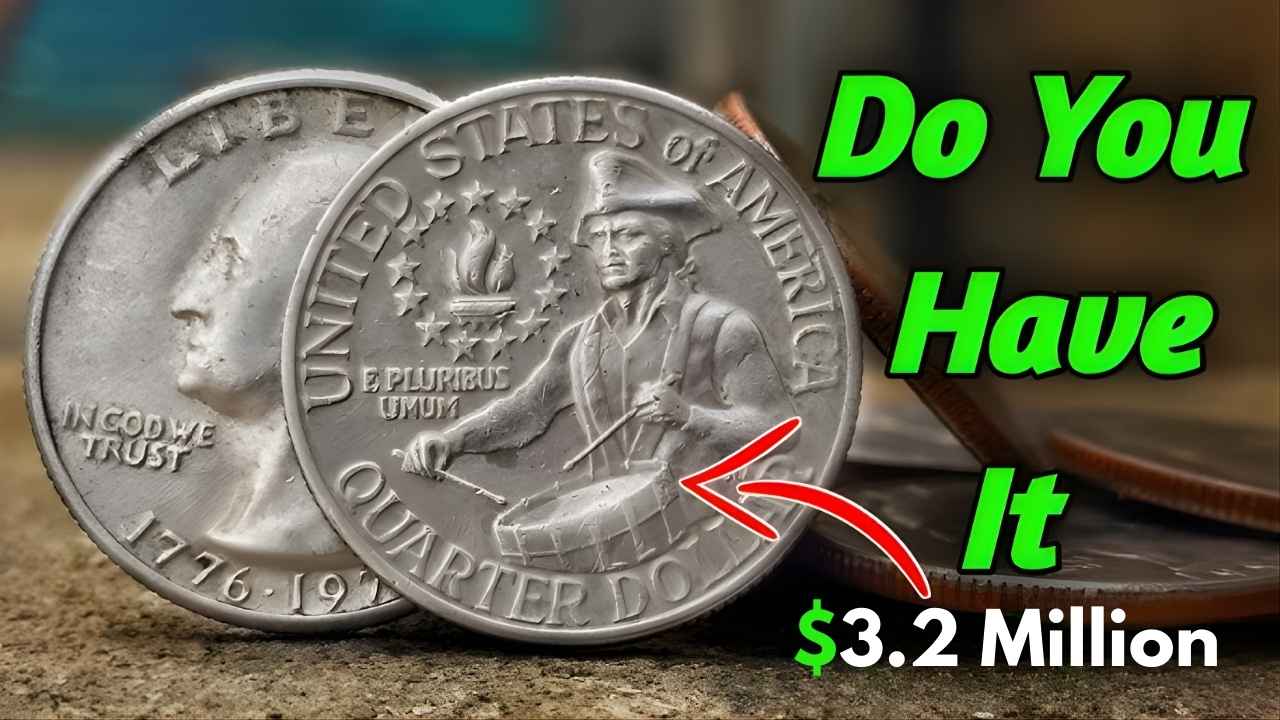
Bicentennial Quarter: Rare Bicentennial Quarter Worth $3.2 Million: The world of coin collecting blends history, chance, and the excitement of uncovering hidden value. Few modern U.S. coins spark as much curiosity as the Bicentennial Quarter issued during America’s 200th anniversary. Although most of these quarters remain ordinary pocket change, select versions with rare characteristics have fueled claims of multimillion-dollar valuations. The possibility that an exceptionally rare Bicentennial Quarter could still be circulating continues to captivate collectors, investors, and everyday Americans who wonder if a fortune might be hiding in plain sight.
Key Facts About the Bicentennial Quarter
| Feature | Details |
|---|---|
| Years Minted | 1975–1976 |
| Obverse Design | George Washington with dual date 1776–1976 |
| Reverse Design | Colonial drummer with torch and 13 stars |
| Common Composition | Copper-nickel clad |
| Special Issues | 40% silver proofs and uncirculated silver |
| Potential High Value | Rare errors and top-graded specimens |
The Story Behind the Bicentennial Quarter
The Bicentennial Quarter was created as part of a nationwide celebration marking 200 years of American independence. Unlike regular quarters, it carries the dual date 1776–1976, a visual reminder of the nation’s founding and its Bicentennial milestone. The reverse design by Jack L. Ahr, featuring a colonial drummer, was chosen through a national competition and symbolized the spirit of the American Revolution.
Production levels were enormous, with hundreds of millions of coins struck at the Philadelphia and Denver mints for everyday use. The San Francisco Mint produced proof and silver collector versions, which were never intended for circulation. This mix of common circulation coins and special collector strikes laid the foundation for future rarity and value differences.
Rare Varieties and Minting Errors That Drive Value
Most Bicentennial Quarters are worth face value, but a small number stand out due to unusual characteristics. Collectors actively search for silver versions, particularly those in proof condition, because of their precious metal content and limited mintage. Beyond silver, minting errors are the real game-changers.
Errors such as doubled dies, off-center strikes, wrong planchet strikes, and missing design elements can dramatically increase value. These flaws occur during the minting process and are often caught and removed, making surviving examples scarce. When combined with exceptional condition, these errors can push prices into the thousands and, in extraordinary cases, much higher.
Understanding the $3.2 Million Bicentennial Quarter Claim
Claims of a Bicentennial Quarter worth 3.2 million dollars sound sensational, but the coin market has a long history of record-breaking sales. Legendary U.S. coins like the 1933 Double Eagle and the 1794 Flowing Hair Dollar have proven that rarity, condition, and historical importance can drive prices into the multimillion-dollar range.
For a Bicentennial Quarter to reach such a figure, it would need to be truly unique. This could include a one-of-a-kind minting error, flawless preservation, and strong demand from elite collectors. While no widely documented public sale has confirmed this exact value, experts agree that unprecedented examples could theoretically command extraordinary prices.
How to Identify a Valuable Bicentennial Quarter
Anyone interested in finding a high-value Bicentennial Quarter should start with close inspection. Key areas to examine include the coin’s surface, lettering, and edges. Look for signs of doubling, unusual metal color, misaligned designs, or missing details.
Mint marks also matter. San Francisco coins, especially silver proofs, are generally more desirable than standard circulation strikes. Condition is equally critical. Coins with sharp details, original luster, and no wear are far more valuable than heavily circulated pieces. Professional grading can help confirm authenticity and maximize market value.
Other U.S. Coins That Command Massive Prices
The Bicentennial Quarter is only one example of how ordinary-looking coins can become extraordinary assets. The 1913 Liberty Head Nickel, with only five known specimens, regularly sells for millions. The 1804 Draped Bust Dollar remains one of the most famous American coins ever struck.
Even modern coins have produced surprises. The 2000 Sacagawea Cheerios Dollar and certain 1964 Special Mint Set coins demonstrate that rarity is not limited to early U.S. history. These examples remind collectors that valuable coins can emerge from almost any era.
Collector Demand and Market Trends in 2026
As of 2026, interest in Bicentennial Quarters and modern U.S. rarities remains strong. Auction results show intense competition for high-grade and error coins, while online marketplaces make it easier than ever for collectors to research and trade. The approaching anniversary nostalgia and renewed interest in American history continue to support demand.
Beginners are also drawn to Bicentennial Quarters because they are easy to recognize and affordable to collect in basic form. This broad appeal keeps the market active and ensures continued attention on rare and exceptional examples.
The Role of Preservation and Grading
Preservation plays a decisive role in a coin’s value. Improper handling can cause scratches, wear, or discoloration that permanently reduce worth. Collectors are encouraged to store coins in protective holders and avoid unnecessary contact.
Professional grading services assess a coin’s condition and authenticity, assigning a standardized grade that buyers trust. High-grade Bicentennial Quarters, especially proofs and error coins, often sell for significantly more than ungraded examples. In today’s market, grading is often essential for maximizing value.
Final Verdict
The Bicentennial Quarter stands as a powerful reminder that everyday currency can carry extraordinary stories and, in rare cases, extraordinary value. While most examples remain common, select varieties and errors have elevated this coin into the spotlight of serious collectors. The idea of a 3.2 million dollar Bicentennial Quarter may be exceptional, but it reflects the limitless potential of numismatics, where rarity and history can transform simple change into priceless treasure.
Disclaimer
Coin values fluctuate based on market demand, condition, rarity, and authentication. Claims of extremely high valuations should be approached with caution and verified through reputable grading services and professional numismatic sources. This article is for informational purposes only and does not constitute financial or investment advice.
